Curiosity begins with a question

Why Curiosity Matters

The instinct to wonder is where meaningful play begins.

Curiosity is more than wanting to know an answer. It is the impulse to look closer, try another approach, take something apart, build something new, test an idea, compare possibilities, and keep going when the first solution does not work. Thoughtful play gives that instinct somewhere to go.

A CurioPlay perspective What happens when we keep asking why?
?
Observe Closely Try Differently Discover More
More than a moment of interest

Curiosity changes how we engage with the world.

When curiosity is active, play becomes less about finishing quickly and more about noticing, testing, understanding, imagining, and returning for another attempt. Those habits matter because they shape how children and adults approach problems, uncertainty, creativity, and learning far beyond a single toy or game.

01 / Attention

Curiosity makes attention feel voluntary.

A challenge that genuinely interests us can hold focus without needing to feel like an assignment. The question itself becomes the reason to stay with the task, notice details, compare patterns, and continue exploring.

02 / Persistence

It turns difficulty into something worth investigating.

When the goal is discovery rather than instant success, a failed attempt can become information. A structure falls. A puzzle piece does not fit. A strategy does not work. Curiosity encourages another question: what could I change next?

03 / Imagination

It creates space for possibilities that are not obvious yet.

Open-ended building, model making, science play, puzzles, and strategy games all invite players to imagine what could happen before they know the answer. That movement between idea and action is one of the most rewarding parts of play.

04 / Confidence

Discovery feels different when the answer is earned.

Solving a difficult challenge, completing a detailed model, understanding a mechanism, or finding an elegant strategy can create a quiet sense of capability. The satisfaction comes not only from the outcome, but from knowing how much thinking happened along the way.

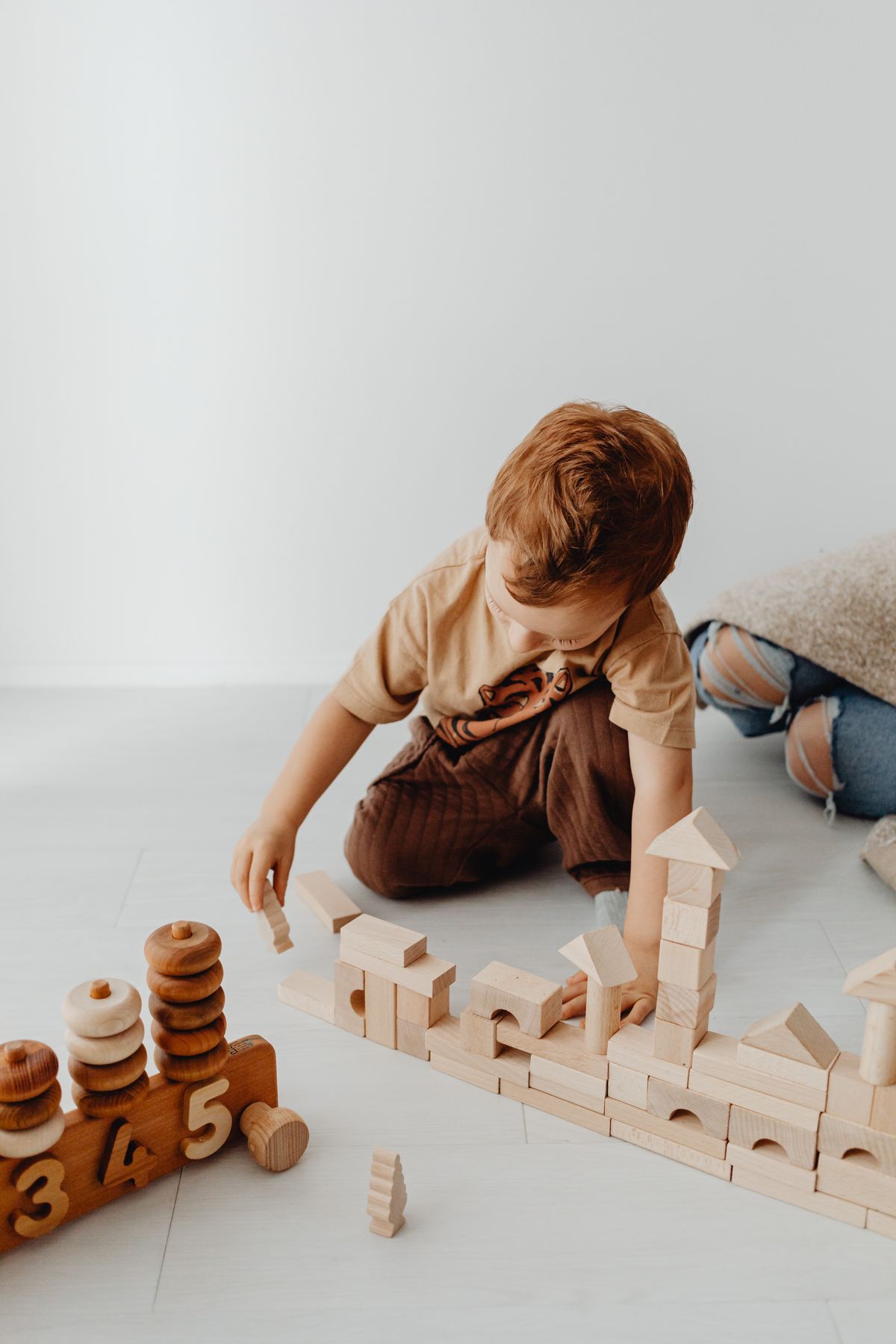
Child carefully building a structure with wooden educational blocks
Curiosity while growing

For children, questions can become a way of learning.

Children naturally investigate through action. They stack, sort, knock down, repeat, compare, ask why, change one detail, and try again. The right kind of play does not have to deliver a lesson in a formal way. It can simply create a setting where thinking feels active, personal, and connected to something they genuinely care about.

Cause & Effect STEM toys, construction systems, and mechanical play help make invisible ideas more tangible through movement, balance, structure, sequence, and reaction.
Pattern Thinking Math games, puzzles, and brain challenges encourage children to notice relationships, repetition, difference, order, and the small clues that lead toward a solution.
Creative Agency Building sets and DIY projects give children a chance to make decisions, test their choices, adapt, and see an idea become something physical.
A natural progression

Curiosity often moves through a simple rhythm.

Meaningful play rarely follows a perfect straight line. It moves from wondering to doing, from doing to noticing, and from noticing to changing the next attempt. That cycle can happen in a science experiment, a board game, a puzzle, a model kit, or a pile of building pieces.


Wonder

Something feels unresolved, surprising, unfamiliar, or interesting enough to deserve a closer look.


Explore

The player touches, tests, sorts, moves, observes, asks, or changes something in order to learn more.


Experiment

Different possibilities are compared and new approaches are tried without needing certainty first.


Understand

A pattern becomes clearer, a mechanism makes sense, or a strategy begins to feel intentional.


Ask Again

One answer creates another question, keeping discovery open instead of ending with simple completion.

Curiosity through play

Different interests invite different kinds of questions.

There is no single product category that owns curiosity. It can appear in a science experiment, a difficult puzzle, a backyard challenge, a strategic decision, a model mechanism, or a construction that begins with no plan at all. The experience changes, but the instinct to investigate remains.

Discovery

STEM & Science Toys

Why did that happen? What changes if I try it another way? Science-led play gives experimentation a physical form.

Patterns

Math & Learning Games

What comes next? Which relationship matters? Number, sequence, memory, and pattern challenges reward careful noticing.

Reasoning

Puzzles & Brain Games

What am I missing? Is there another route to the answer? Good puzzles make persistence part of the pleasure.

Structure

Building & Construction Toys

Will this balance? Can this structure become stronger? Building turns spatial thinking into something visible and tactile.

Movement

Outdoor & Active Play

How far, how fast, how accurately, how differently? Physical play adds movement, coordination, and environment to exploration.

Challenge

Adult Puzzles & Brain Teasers

What happens when the obvious answer is not enough? More advanced challenges create space for deep focus and deliberate reasoning.

Decision

Strategy & Board Games

What is another player thinking? Which choice creates the strongest future position? Strategy makes curiosity social and replayable.

Making

DIY Craft & Model Kits

How do these pieces become something complete? Craft and model making connect patience, process, and creative satisfaction.

Mechanics

Mechanical & Building Models

How does it move? Why does this mechanism work? Detailed models make engineering principles satisfying to see and assemble.

Curiosity beyond childhood

Adults need absorbing questions too.

Curiosity does not disappear when childhood ends. It simply changes form. For adults, a complex puzzle, an intricate model, a strategic game, or a detailed hands-on project can offer the rare satisfaction of being completely engaged in one thing at a time. The reward is not only finishing. It is the quality of attention experienced along the way.

Deep Focus A demanding puzzle or model can create an immersive period of concentration that feels meaningfully different from passive entertainment.
Active Leisure Strategy, building, and making transform downtime into something participatory without turning it into work.
Shared Curiosity Board games, collaborative builds, and challenging puzzles can create a thoughtful way for adults, families, and friends to spend time together.
Adult working carefully on a detailed tabletop jigsaw puzzle
What thoughtful play looks like

We value the process, not only the finished result.

CurioPlay is built around play that gives people something meaningful to do: investigate, solve, build, compare, create, move, plan, assemble, and think. The best experience is often one that keeps a little mystery alive.

01

Enough challenge to stay interesting.

Play becomes more compelling when the answer is not immediately obvious, but the next step still feels possible.

02

Enough freedom to allow discovery.

Open-ended construction, experimentation, and creative projects leave room for players to make decisions rather than simply follow a fixed path.

03

Enough depth to invite another attempt.

Replayable games, layered puzzles, flexible building systems, and mechanical models can reward revisiting instead of feeling finished after a single moment.

04

Enough satisfaction to make effort worthwhile.

The click of a correct puzzle piece, a stable structure, a working mechanism, or a strategy that finally succeeds gives thinking a tangible reward.

05

Enough variety for curiosity to change over time.

Interests shift. A puzzle lover may become a model builder. A child drawn to experiments may later enjoy strategy. A builder may discover mechanics. Curiosity grows best when it has room to move.

Common questions

Understanding curiosity in everyday play.

These questions offer a practical way to think about curiosity when choosing toys, games, puzzles, models, and creative activities for children or adults.

Does curiosity always need an educational toy?

No. Curiosity can emerge through many forms of play. A puzzle may encourage logical reasoning, a board game may invite strategic thinking, a building set may encourage spatial experimentation, and outdoor play may create questions about movement, balance, distance, or coordination.

How can I tell when a toy is genuinely engaging?

Look for signs that the player is making decisions, trying again, noticing details, experimenting with alternatives, discussing what is happening, or returning to the activity without being prompted. Engagement often appears through sustained attention rather than constant excitement.

Is frustration always a sign that a challenge is too difficult?

Not necessarily. A modest amount of difficulty can make success more satisfying. The useful question is whether the challenge still feels approachable. If the player can imagine another step or make progress with reasonable support, difficulty can become part of the discovery process.

Can curiosity-focused play work for adults too?

Yes. Complex puzzles, mechanical models, construction projects, strategy games, and detailed DIY kits can provide adults with challenge, concentration, tactile engagement, and a meaningful alternative to passive leisure.

Which CurioPlay interests support open-ended exploration?

STEM and science toys, building and construction toys, DIY craft and model kits, mechanical models, and many outdoor activities can be especially strong for exploratory play. Puzzles and strategy games also support curiosity through more structured forms of problem solving.

Why does CurioPlay include both children and adults?

Curiosity is not limited to one stage of life. Children may explore through experimentation and open-ended play, while adults may prefer complex puzzles, detailed models, strategic games, and focused hands-on projects. The form changes, but the pleasure of discovering something does not.

Keep the question open

Good play does more than fill time. It gives curiosity somewhere to go.

From STEM experiments and puzzles to strategy games, building sets, outdoor play, DIY projects, and mechanical models, CurioPlay celebrates the kind of play that invites one more question, one more attempt, and one more discovery.

Explore Curiosity Through Play