Slow Focus
Bring out a detailed puzzle, a mechanical model, a brain teaser, or a thoughtful math game. Keep the table clear, put devices away, and let everyone settle into the challenge at their own pace.
Great family play does not need a complicated plan. A puzzle on the table, a small engineering challenge, a strategy game after dinner, or an outdoor competition can turn an ordinary hour into something everyone remembers. This guide is designed to help kids and adults choose activities that feel social, curious, creative, and genuinely enjoyable.

The best activity is often the one that fits the energy already in the room. Some evenings call for a quiet puzzle and patient concentration. Others need movement, teamwork, building, experimenting, or a little friendly competition.
Instead of planning play around age alone, try planning around mood, time, attention, and the kind of connection your family wants. It makes choosing something to do feel simpler and gives everyone a better chance of staying involved.
Pick the feeling first, then choose the activity. It is an easy way to make family play feel natural instead of scheduled.
Bring out a detailed puzzle, a mechanical model, a brain teaser, or a thoughtful math game. Keep the table clear, put devices away, and let everyone settle into the challenge at their own pace.
Choose a board game with simple setup and enough decision-making to keep adults interested. Rotate who explains the rules, who starts, and who gets to choose the next game.
Turn the table into a mini workshop. Build a structure, assemble a model, test a science idea, or create a small challenge where everyone can make a prediction before trying it.
Add movement with a backyard target challenge, relay, balance activity, tossing game, or family competition. Keep the rules short and let the format evolve as everyone gets involved.
A little structure helps a family activity start smoothly without making it feel formal. Use this four-part rhythm for puzzles, games, models, and STEM sessions.
See Quick PromptsOffer two or three options instead of asking everyone what they want to do. A short choice prevents the familiar ten-minute debate before play even begins.
Finish one puzzle section, build the strongest bridge, complete one game, solve three brain teasers, or test a design twice. A clear endpoint keeps the activity satisfying.
Give different people a turn as builder, rule reader, scorekeeper, experiment lead, puzzle sorter, or strategy captain. Rotating roles makes participation feel more balanced.
Family activities do not need to fill the entire evening. Stopping on a good note helps create anticipation for the next round instead of turning play into an obligation.
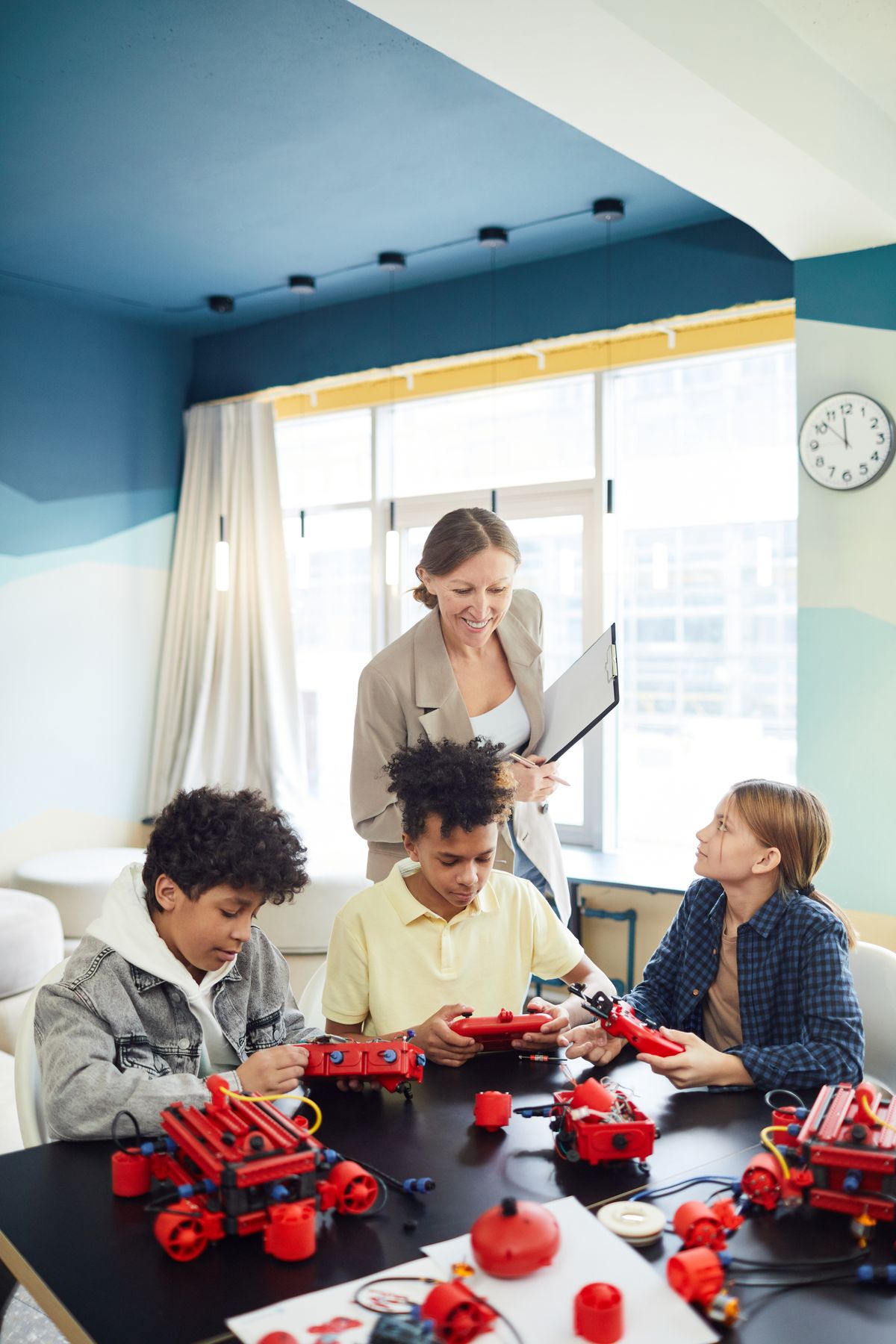
STEM play works especially well when the goal is exploration rather than a perfect result. Give kids room to test an idea, make a mistake, rebuild, and explain what changed. Adults can join as collaborators instead of taking over the project.
For a family challenge, choose one simple question and let everyone approach it differently. Build the tallest stable structure, design a moving model, compare two mechanisms, or predict what will happen before a small science experiment.
CurioPlay is built around the idea that play can grow with people. The format can change while curiosity, challenge, and connection stay at the center.
Use activities with visible progress and quick feedback. Building, matching, simple puzzles, movement, and hands-on experiments help maintain momentum without requiring a long explanation.
Mixed-age play works best when success is not based on one skill alone. Combine observation, strategy, building, memory, creativity, and communication so everyone has a meaningful way to contribute.
Puzzles, brain teasers, mechanical models, strategic board games, and detailed DIY projects offer a satisfying kind of focus for adults who want something more engaging than passive screen time.
Use these categories as a family activity menu. Each one creates a different pace, challenge, and reason to gather around the table or head outside.
Experiment, observe, build, test, and discover through hands-on learning.
Turn numbers, logic, patterns, and learning skills into interactive play.
Slow the room down with visual thinking, logic, matching, and problem solving.
Create, rebuild, engineer, and turn loose ideas into something physical.
Add movement, coordination, teamwork, and friendly competition outdoors.
Enjoy a more demanding challenge built around patience, logic, and focus.
Gather around the table for decisions, tactics, conversation, and replayable fun.
Make something slowly and intentionally through hands-on creative projects.
Explore movement, mechanisms, assembly, and detailed construction step by step.
When nobody knows what to play, skip the long discussion and start with one small prompt.
Pick an everyday challenge: hold a book upright, move a small object without touching it directly, create a bridge between two surfaces, or make a model with one moving part. Set a fifteen-minute build window, compare the results, then give everyone one chance to improve the design.
Set a timer for twenty minutes and see how much progress the family can make together. Stop when the timer ends, even if the puzzle is unfinished, and continue another day.
Choose a short strategy, math, or dexterity game and play three rounds. Change the starting player each time so the rhythm stays fair and fresh.
A few practical ways to make shared play easier to start, easier to sustain, and enjoyable for different ages.
There is no ideal length. For younger children, shorter sessions often work better, while older kids and adults may enjoy longer games, puzzles, or builds. Start with twenty to forty minutes and stop while everyone is still interested.
Look for activities that involve several kinds of skills rather than one narrow ability. Team building, cooperative puzzles, construction projects, outdoor challenges, and role-based games let younger and older family members contribute in different ways.
Ask questions, make predictions, take a defined role, and let children make meaningful decisions. When something fails, resist fixing it immediately. Give the group time to identify the problem and suggest the next attempt.
Reduce the decision to two options. For example, offer a puzzle or a board game, a model build or a science activity, indoor strategy or outdoor movement. Small choices are easier to make than an open-ended question.
Absolutely. CurioPlay includes adult puzzles, brain teasers, strategy games, DIY kits, and mechanical models that work well for couples, friends, family gatherings, or quiet solo project time.
Rotate the person who chooses the activity, mix competitive and cooperative formats, introduce a building or puzzle night between board-game evenings, and occasionally add a simple family challenge or tournament format.
A good family activity does more than fill time. It creates conversation, concentration, laughter, challenge, experimentation, and the small moments that make being together feel memorable.
Start With an Idea